
The Bitter Principle and the Gut-Brain axis

In today’s modern world many people eat on the go and don’t slow down to chew and enjoy their meals. This habit paired with higher stress levels and tension held in the body has an overall weakening impact on the digestive strength. Partially this is understood through the interaction and stimulation of the vagus nerve that travels from the cranial nerves down into the gut and innervates the organs within the digestive system: the liver, gallbladder and pancreas. The vagus nerve releases acetylcholine as a messenger that then allows for stimulation of digestive enzymes and bile to be released and help to break down foods as well the signals that encourage motility of the smooth muscles in the digestive tract. The signals of the vagus nerve are bidirectional and provide a “gut-brain”communication loop, allowing the brain to monitor gut nutrient status while regulating motility and digestive enzyme release. This results also in messages from the level of the gut to translate information back to the brain regarding the status of digestion, inflammation and other factors.
When stress is high and we do not eat in a mindful way, the messages down to the gut can be impaired which results in a weaker digestive secretion. When certain patterns show up in the history of the patient’s bowel habits, such as loose stool, gas and bloating, and paired with the visual appearance of a scalloped tongue there is a very strong indication to use herbal medicines to strengthen the digestive system. One of my favourite in this case is the use of herbal bitters.
Herbal bitters are extracts from herbs that have an overall bitter taste when perceived on the tongue. The "bitter principle" in herbs is not caused by a single chemical structure, but rather by a diverse group of secondary plant metabolites that share the ability to stimulate bitter receptors on the tongue and in the gastrointestinal tract. Some of these constituents (for the herb nerds out there) are known as terpenoids (specifically iridoids and sesquiterpene lactones), alkaloids, glycosides, and various phenolic compounds.
Bitters aid digestion by acting as a sensory cue that triggers a "bitter reflex," which stimulates the vagus nerve and shifts the body out from a "fight-or-flight" (sympathetic) state to a "rest-and-digest" (parasympathetic) state. This mechanism involves activating bitter taste receptors (T2Rs) in the mouth and throughout the gastrointestinal tract, promoting the production of digestive enzymes, gastric acid, and bile, while also improving gut motility.
The process begins when bitters interact with TAS2Rs (type-2 taste receptors), also known as T2Rs, located on the tongue and throughout the gastrointestinal tract. When these receptors are activated, they signal the nervous system. Holding the bitters in the mouth for 15–30 seconds allows these receptors to be fully activated, sending the necessary signals to the brain to prepare the digestive tract. Typically I tell patients to take their bitters right on the top of their tongue (not underneath) a few minutes before eating. Ideally they should also remove distractions and focus on their meal; chewing, tasting and calmly eating to help the body remain in parasympathetic mode of “rest and digest”.
A Few of the bitter herbs that I grow on my farm:
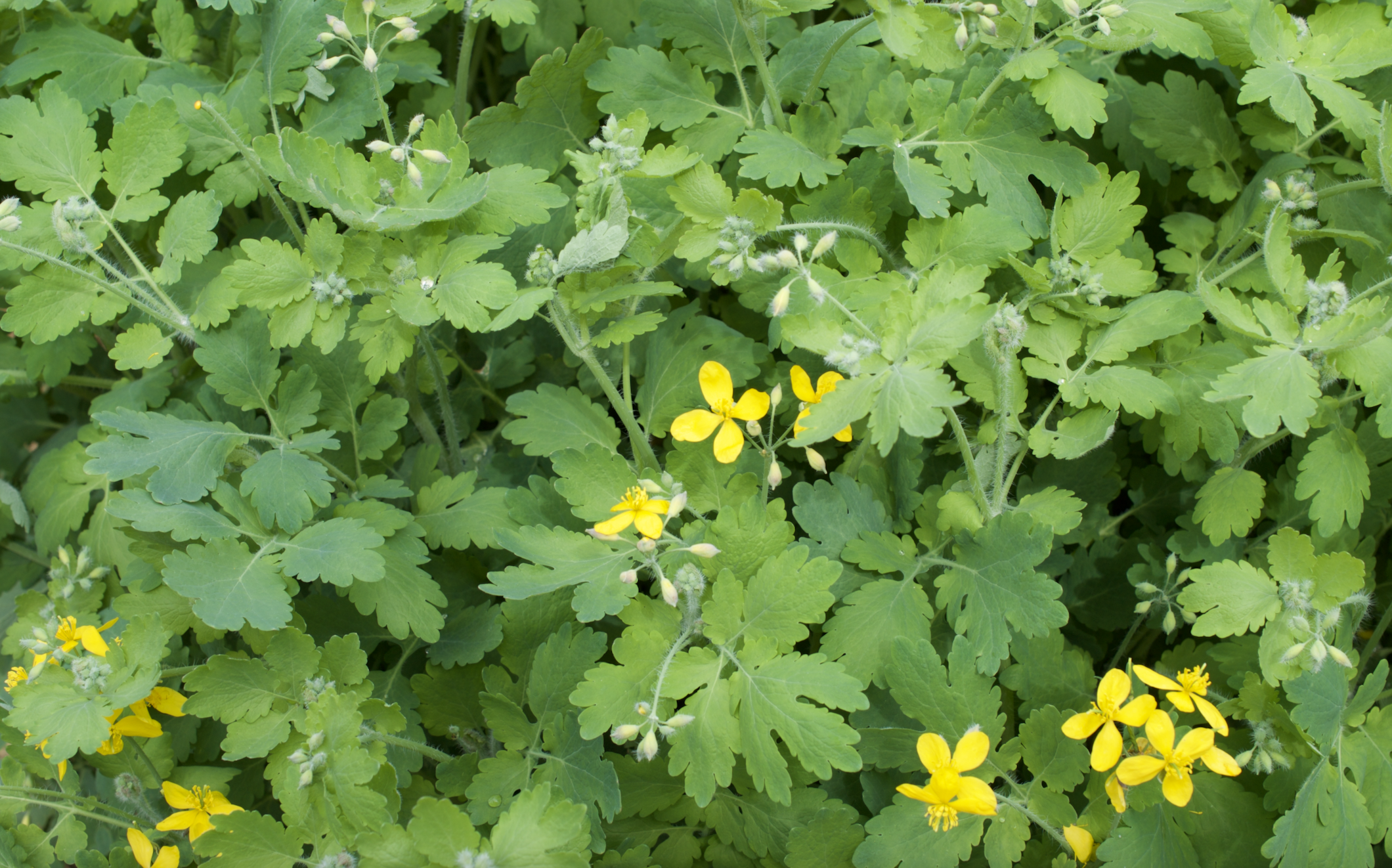
Greater Celandine
(Chelidonium majus)
I first met this plant while doing an internship with Chanchal Cabrera at Innisfree farm in 2015. The bright orange latex that flows through the leaves, flowers and stems is sure to leave a lasting impression when you break apart the stems and see the colour. The taste is a strongly bitter that is sure to stimulate those T2R receptors. The herb chelidonium is a strong cholagogue which means that it helps to stimulate and encourage more secretion of bile. At drop dosages that we do with the herbal bitters it only has a mild cholagogue effect but when taken in higher amounts will push biliary function. I use this more intensely when it is needed and the patient doesn’t have a recent history of choliathiasis (biliary stones), in some cases I use this to prevent recurrence of bile stones. The plant is also used internally for a range of liver conditions such as jaundice, hepatic congestion, biliary dyspepsia, bilious migraine headaches, hepatitis, gallstones, and indigestion.

Fennel
(Foeniculum vulgare)
Fennel is mainly used for the digestive system as a carminative to relieve gas and bloating, and to relax the smooth muscle of the digestive tract with dyspepsia, cramping, colic, vomiting, and diarrhea. It can also be used for IBS and other inflammatory conditions of the bowel. I generally work with fennel seed, but all parts of the plant are medicinal and edible.. In addition to the beneficial digestive components of the fennel plant it also is useful for its use as an anti-inflammatory, carminative, galactagogue (helps with breast milk) and nootropic.
An example of a formula that would be supportive for bitter stimulation and supporting digestion might look like:
For helping gut brain axis of digestion
Bitters: Chelidonium, Gentian, Foeniculum, Acorus 50 ml bottle (equal parts) - drop 3-5 drops on top of tongue before each meal.